
15:00
6
min at reading ▪
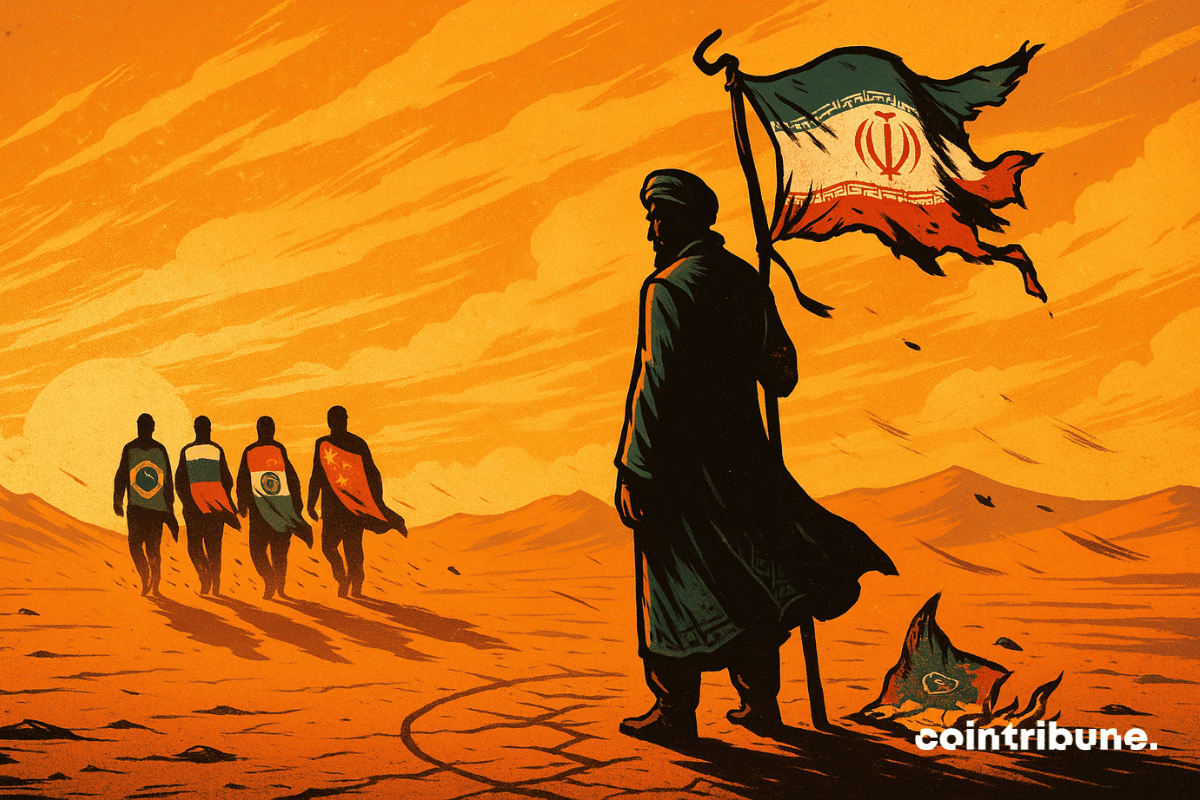
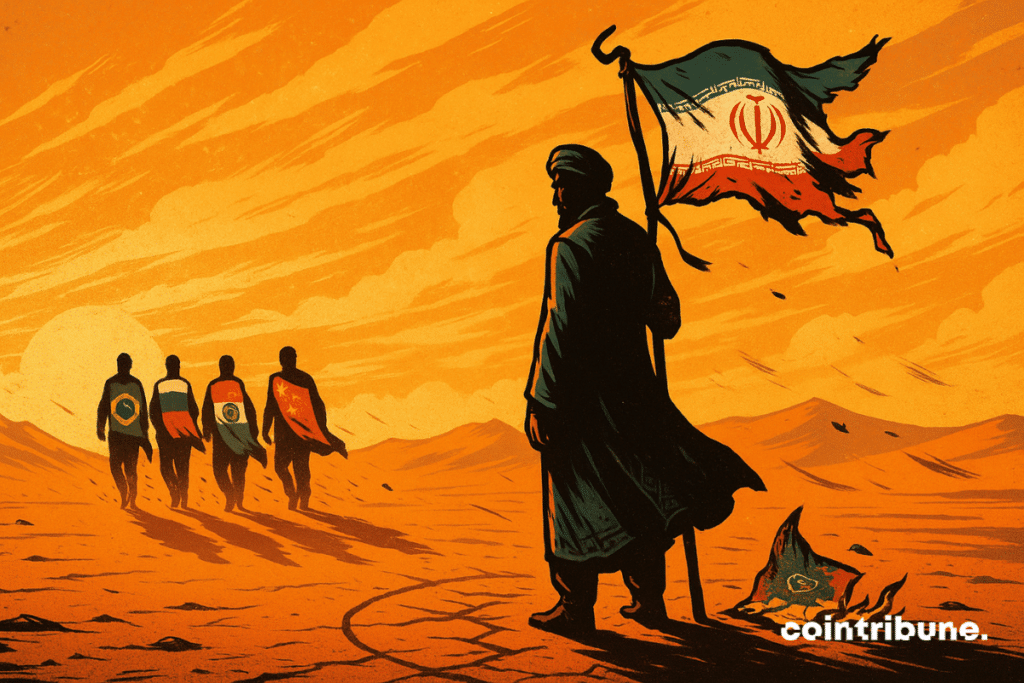
While Israeli strikes focus on Iranian sensitive places and Tehran reacts by rockets on Tel Aviv, military climbing redefines in the Middle East. Strategic absence, however, intrigue: BRICS. The new arrival in the block, Iran reached for solid support against the oath enemy. But neither Moscow nor Beijing, nor the new Delhi are not committed. This silence explodes the boundaries of the alliance that Tehran saw as a counterweight to Western hegemony.
In short
- The conflict between Iran and Israel is intensified and unpublished military strikes on both sides.
- Despite his recent BRICS membership, Iran finds himself in the face of military climbing.
- Russia condemns Israel, but rejects any military support of Tehran and provokes a partnership without a clause for mutual defense.
- Other BRIC members, such as China and India, avoid any involvement, each of which prefers their strategic interests.
Diplomatic support without military scope
While the spectrum of the overall war is confirmed, Russia, which considered the strategic partner who was most committed to Iran, rejected any idea of military intervention into the current conflict.
In a press release published by the Kremm Vladimir Putin certainly expressed his “Capitation of Israeli actions carried out in violation of the UN Charter and International Law”and introduced his “Condolences to the Iranian people for many victims”.
He spoke to Iranian President Masoud Pezshkian and Israeli Prime Minister Benjamin Netanyahu and called for escalation. However, this posture was quickly accompanied by clarification. Despite the recent signature and “Strategic Partnership Agreement”Russia does not intend to bring any military support to Tehran.
This contract, signed in January 2025 and ratified in the spring, contains no clause for mutual defense. It is limited to the obligation not to support the enemies of the other party.
The reasons for this caution are multiple and anchored in the diplomatic strategy of Moscow. To date, Russia has been limited to posture of geopolitical balance to preserve both its regional interests and its space for maneuvering before the West. Specifically:
- The Russian-Iranian Treaty is not a military pact and does not provide any clause for help in the event of an attack;
- Moscow remains mobilized by war in Ukraine and avoids the opening of the second front, especially against Israel, military and nuclear energy;
- The Kremlin tries to maintain a dialogue with Washington, especially through his role as a potential mediator in this conflict;
- Vladimir Putin has repeatedly suggested to make it easier to return to the negotiating table, which is the possibility Donald Trump publicly appreciated.
In short, Russia refuses to convert its strategic partnership with Iran into a particular military commitment by diplomatic language and verbal condemnation. The aim of this tactical placement is to reduce climbing, but de facto tehran in the position of vulnerability to Israel.
BRICS in the test of their geopolitical contradictions
If Tehran could hope for collective support from the Brics Alliance, expectations appeared against reality. June 16, spokesman for the Iranian Ministry of Foreign Affairs, Esmaeil Baqaei, said:
We hope that BRICS will take a position and acknowledge reality in our region, where the criminal regime has launched an illegal armed attack on another country.
However, if the organization for cooperation in Shanghai (OCS) condemned Israeli strikes, BRICS, did not publish any unified statement. The deep differences between members slow down any common backstage response.
China, although approaching Iran at the energy level, really does not wish to engage in a conflict that could disrupt its global trade. India is at a distance from any hostility to Israel, with which it maintains close security cooperation.
This diplomatic silence illustrates structural reality: BRICS does not represent a security alliance. Unlike NATO, therefore, the group has neither a normal military doctrine nor coordinated intervention mechanisms.
Each state prevents its own national, often contradictory interests, especially in foreign policy matters. Iran joined the group last January, counting on ideological solidarity before the West. However, reality is more pragmatic. At this stage, none of the heavy weight of the block is ready to endanger its bilateral relations with Israel or the United States to defend Tehran.
This lack of reaction raises the issue of BRIC’s political credibility. If the powerful forum of attacking the Western model, especially in economic matters, remains, as evidenced by the massive release of US assets, its inability to act in a great crisis situation could eventually reduce its strategic scope. For Iran, insulation is brutal. It passes through the main military offensive, but also finds itself without a solid diplomatic lever to mobilize its allies. If we do not have a change of posture, Tehran will have to face climbing alone.
Maximize your Cointribne experience with our “Read to Earn” program! For each article you read, get points and approach exclusive rewards. Sign up now and start to accumulate benefits.

A graduate of the Toulouse and the Blockchain Consultant Certification certification holder and I joined the adventure of Cointribuna in 2019. I convinced of the potential of blockchain to transform many economy sectors, committing to raising awareness and informing the general public about how the ecosysty developed. My goal is to allow everyone to better understand blockchain and take the opportunity they offer. I try to provide an objective analysis of messages every day, decrypt trends on the market, hand over the latest technological innovations and introduce the economic and social issues of this revolution.
Renunciation
The words and opinions expressed in this article are involved only by their author and should not be considered investment counseling. Do your own research before any investment decision.